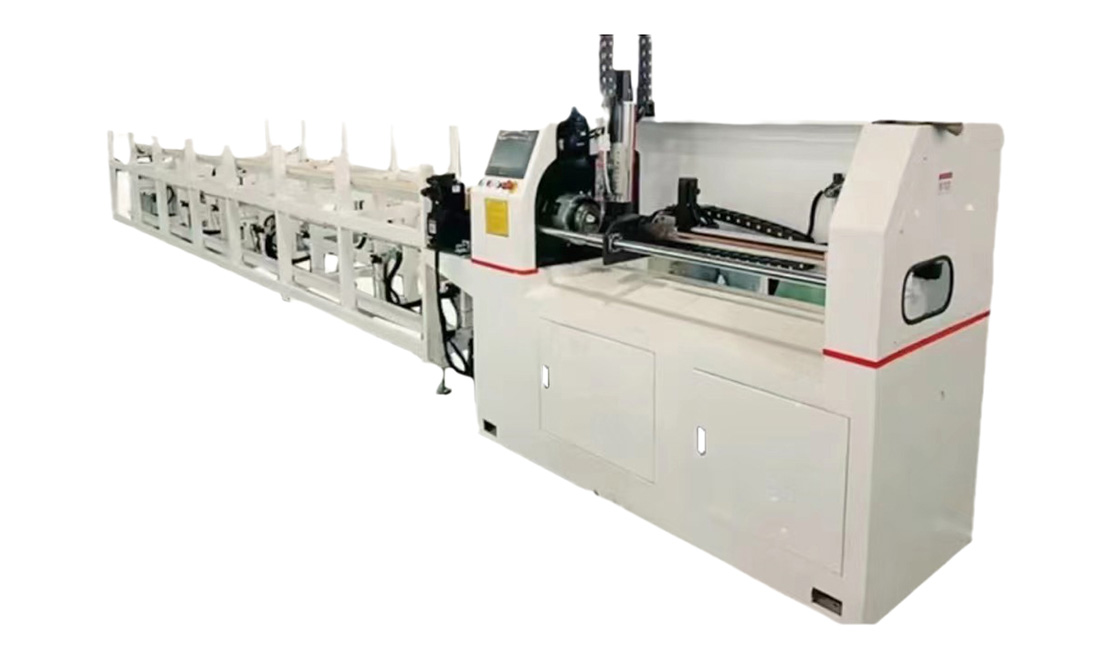
3D Tube Laser Cutting Machine vs 3D CNC Tube Cutting Machine
Jump to section
Looking for the right cutting machine for your business? You’ve likely come across two major options: CNC machines and laser cutters. They may appear similar at first glance, but their operation and strengths differ significantly.
If you’re weighing CNC vs. laser and need a clear comparison, you’re in the right place. This guide breaks down how each machine works and highlights what each does best, helping you choose the one that truly fits your needs.
What is a Laser Cutter?
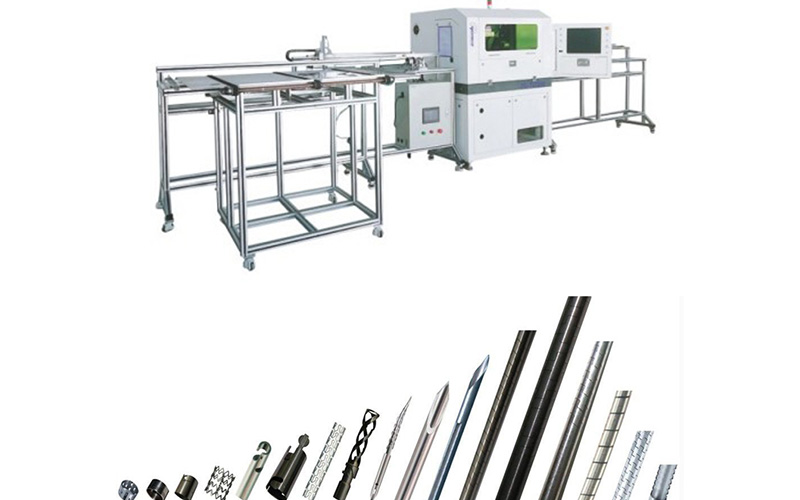
A laser cutter is a cutting machine that uses an ultra-focused beam of light to burn, melt, or vaporize material, enabling precise cutting and engraving.
Core Technology and Operation
Laser cutting directs energy from a fiber or CO₂ laser through a lens to a small point on the material. The energy melts or vaporizes the surface along a path defined by software.
In 3D tube laser cutting, rotatable chucks hold and turn the tube while the cutting head moves to allow cuts from different angles. Fiber lasers are common for metals like stainless steel and aluminum.
Some machines switch between cutting and engraving by adjusting power and focus. Engraving marks barcodes, logos, or part numbers without cutting through the material.
Key Advantages in Manufacturing
Laser cutters create accurate, repeatable parts with little manual work. They cut directly from digital models, making design changes quick and reducing tooling costs.
Laser systems use a non-contact method, causing little mechanical stress and improving production efficiency. Many machines have automatic loading and unloading to boost throughput.
Material Compatibility and Applications
Laser cutters and engravers work with metals like steel, aluminum, brass, and copper, as well as plastics, wood, and composites. Fiber lasers cut reflective metals well, while CO₂ lasers suit nonmetals.
3D tube laser machines process round, square, and rectangular tubes, making them useful in automotive, aerospace, medical devices, and furniture. Engraving allows for part identification and branding in one step.
What is a CNC Router/Cutter?
A Computer Numeric Control (CNC) Router is a computer-controlled cutting machine whose movements are precisely guided by numerical instructions.
Principles of CNC Tube Cutting
CNC tube cutting uses computer numerical control to direct a rotating cutting bit along programmed paths. The machine follows instructions from software to cut, drill, or mill tube surfaces.
3D CNC tube cutting machines move along three to five axes for complex shapes and angled holes. Feedback systems and servo motors help maintain accuracy.
Cutting tools like end mills and rotary cutters come in various sizes and coatings for different materials. The control system sets speed and feed rate to optimize quality and reduce waste.
Types of CNC Machines for Tubes
CNC machines for tubes differ in axis configuration and capability. Standard 3-axis machines cut along X, Y, and Z directions, while 4- or 5-axis systems tilt and rotate tubes for complex shapes.
CNC milling machines use rotating cutters to remove material, while CNC lathes spin the tube as a stationary tool shapes the surface. Hybrid systems combine cutting and milling for more features.
Machines range from compact workshop tools to large industrial models. Tube-specific CNC cutters use rotating chucks and rollers for round or irregular shapes.
Material Handling and Flexibility
CNC tube cutting uses clamping, rotation, and feeding systems to position tubes accurately. Automated loading and unloading reduce downtime and improve efficiency.
CNC machines process steel, aluminum, brass, carbon fiber, and plastics. The control system adjusts spindle speed and feed rate for each material.
3D CNC tube cutting machines use sensors and vision systems to adapt to tube bends and angles, making them useful for automotive, aerospace, and custom fabrication.
CNC Router vs Laser Cutter: The Main Differences
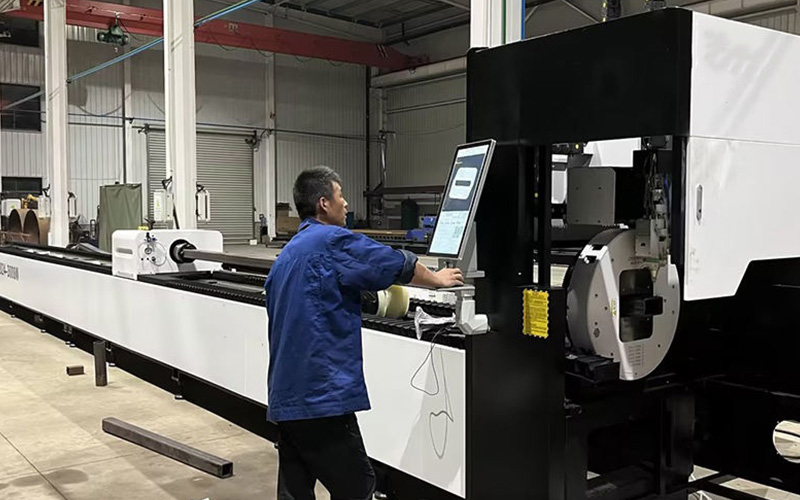
CNC routers and laser cutters both turn digital designs into physical parts, but they use different methods. Their performance depends on cutting style, material compatibility, and precision. These factors determine which machine fits a specific application.
- Cutting Method
- Precision and Accuracy
- Cutting and Engraving Speeds
- Materials Compatibility
- Operational Costs
- Learning Curve
- Material Wastage
- Safety Considerations
- Noise
Cutting Method
CNC routers use a mechanical spindle and cutting bit to remove material by contact. The bit spins at high speed along a programmed path, and changing bits allows different shapes.
Laser cutters use a focused beam to melt or vaporize material without contact. The laser always cuts vertically, and operators can adjust power and speed for different materials.
CNC routers shape objects in three dimensions and work well for thick materials. Laser cutters excel at fine 2D profiles and surface engraving.
Precision and Accuracy
Precision is how closely a machine follows its design, and accuracy is how near the result is to the intended size. Laser cutters usually provide higher precision due to the narrow beam, allowing sharp corners and tight tolerances.
CNC routers depend on tool size and machine rigidity. The cutting bit’s diameter limits detail, and vibration may affect accuracy on thin materials.
Lasers work best for fine engraving and detailed outlines. CNCs are better for deep or structural cuts in thick materials.
Cutting and Engraving Speeds
Laser cutters often cut faster than CNC routers for thin sheets because the beam removes material instantly. Laser speed depends on power, focus, and material type.
CNC routers move slower because they use mechanical contact and must avoid tool wear. For thick stock, routers maintain stable cutting depth.
Lasers engrave quickly with consistent shallow marks. CNC engraving is slower and better for deep, sculpted surfaces.
Materials Compatibility
CNC routers cut wood, plastics, composites, aluminum, brass, and some stone with the right bit. They handle thick materials in one pass.
Laser cutters work best on thin materials like acrylic, wood, leather, paper, and fabric. Most standard laser systems cannot cut reflective metals without special optics.
Some materials, like PVC and ABS, release harmful gases when laser cut. CNC machines can cut these safely since they use mechanical force.
Operational Costs
CNC routers need replacement bits and collets, especially for abrasive materials. They use more energy due to spindle motors and dust collection.
Laser cutters use mirrors, lenses, and a laser tube. CO₂ tubes need replacement over time, but fiber lasers last longer and use less power for thin cuts.
CNC maintenance focuses on calibration and lubrication, while lasers need lens cleaning, exhaust filters, and cooling. Users should compare both initial and ongoing costs for their production needs.
Learning Curve
The learning curve shows how quickly an operator becomes skilled. CNC machining requires knowledge of CAD and CAM software, tool selection, spindle speeds, and feed rates.
Users need technical skill and practice because incorrect settings can damage tools or materials. Laser cutters are easier to learn and use vector graphics software for operation.
Users adjust laser power, speed, and focus, and the process is mostly automated after setting up the design. Advanced laser operations like 3D engraving still require experience.
Material Wastage
Material wastage is the amount of material lost during cutting. Laser cutting has a narrow kerf, which reduces waste and allows parts to nest closely.
Laser cutters do not produce visible chips or scraps, making them efficient for material use. CNC routers create more waste by milling, resulting in dust, chips, and a wider kerf.
For thin-sheet cutting or mass production, lasers offer a higher yield. CNC routers work better for thick or tough materials, accepting more waste for added strength and precision.
Safety Considerations
Safety risks differ between CNC routers and laser cutters. CNC routers can cause bit breakage, flying debris, and loud noise, so operators need safety glasses, dust extraction, and hearing protection.
Proper ventilation is important because dust can harm breathing. Laser cutters do not create moving debris but produce intense light and toxic fumes.
Operators use sealed enclosures and viewing windows to block laser exposure. Fire risks and fumes require clean air systems and fume extractors, especially when cutting plastics or organic materials.
Noise
Noise affects comfort and safety in the workspace. CNC routers are loud because of spinning spindles and mechanical movement, often reaching 70 to 100 dB.
Harder materials make CNC routers even noisier. Laser cutters are quieter, with most noise coming from fans or exhaust systems, usually between 50 and 75 dB.
Low noise makes lasers suitable for offices or studios. CNC routers are usually placed in workshops or industrial areas where noise control is easier.
CNC Cutting vs Laser Cutting: Which One to Choose?Key Considerations
We’ve covered the differences in detail, so now let’s figure out which cutter suits you. There’s no one-size-fits-all answer—it depends on the type of job, the material you’re working with, and your skill level in operating the machine.
Nature of Job
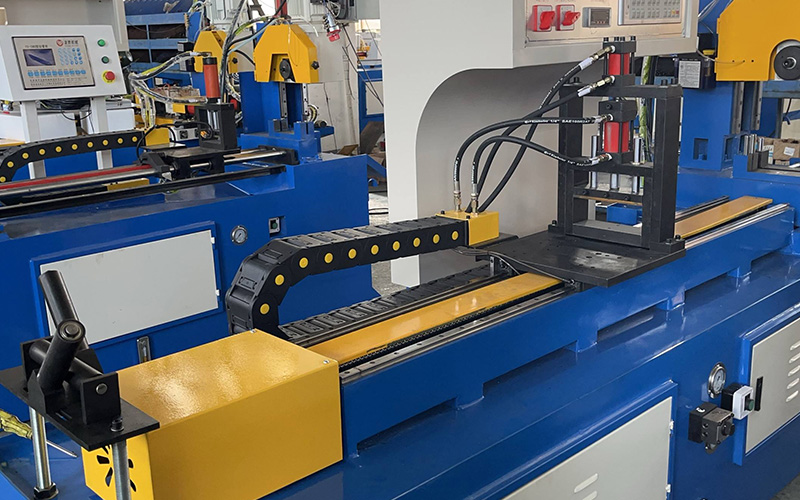
The job’s requirements determine the best machine. CNC tube cutting machines use rotating tools to remove material, making them ideal for complex, three-dimensional parts like frames and connectors.
They work well on metals needing deep cuts or shaped surfaces. 3D tube laser cutters use a laser beam to cut along a set path, giving fast, accurate cuts for thin or hollow tubes.
Laser cutters suit jobs needing fine detailing or lightweight assemblies. CNC cutters are better for medium to heavy production, while lasers are good for rapid prototyping and small batches.
Material Depth
Material depth means how thick a machine can cut. A CNC tube cutter can cut deeper into tough materials like steel or composites.
This suits heavy-duty parts or thick tubing. A laser tube cutter works best on thin-to-medium tubes and leaves a clean edge.
High-powered lasers can cut metal tubes, but they perform best on walls only a few millimeters thick. For thick, strong materials, CNC cutters are preferred.
| Cutting Type | Best for Thickness | Typical Finish | Speed |
| CNC Tube Cutting | Thick, solid metals | Smooth, machined | Moderate |
| Laser Tube Cutting | Thin-to-medium tubes | Polished edge | Fast |
Technical Awareness
Technical awareness is the knowledge needed to run the equipment. CNC tube cutting machines require skill in tool path programming, bit selection, and feed rates.
Operators must handle calibration and maintenance for different materials. CNC systems suit experienced machinists familiar with CAD/CAM software.
Laser tube cutting machines use software automation. Users set beam focus, power, and speed through an interface.
Laser systems are easier to learn, but safety and maintenance are still important. Shops with skilled machinists may prefer CNC, while those needing precise, repeatable results often choose lasers.
Frequently Asked Questions
What are the disadvantages of laser cutting?
Laser cutting uses a focused beam for precise cuts. The high initial investment makes it less practical for small or low-volume operations.
Lasers have limited thickness capability. Thick metals take more time and energy, lowering productivity.
Laser systems need regular maintenance to keep optics clean and aligned. Some materials, like copper or reflective metals, can cause beam reflection issues and reduce performance without proper protection.
What are three disadvantages of a CNC machine?
A CNC machine uses computer control to cut, shape, or mill materials in three dimensions. One clear disadvantage is its high operating cost.
Skilled operators, software programming, and regular maintenance all increase expenses.
A second disadvantage is slower production speed for certain shapes. CNC tools often take longer than laser systems to complete intricate cuts because they use mechanical contact.
The third disadvantage is tool wear and replacement. Mechanical tools become dull over time, especially when cutting hard metals.
Frequent tool changes increase costs and interrupt production, which reduces efficiency for larger manufacturing jobs.
Want to Know More About Our Products?
View All Products Now