Fin Evaporator: Key Benefits and Applications Explained
Jump to section
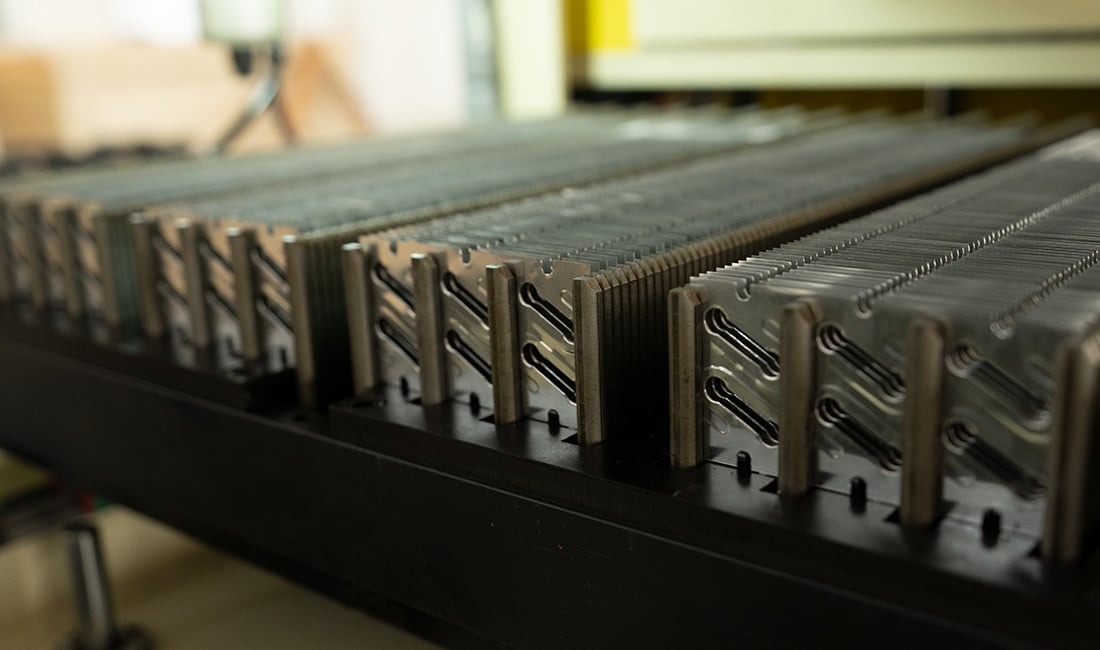
A fin evaporator improves heat transfer by expanding the surface area that exchanges heat between air and refrigerant, resulting in faster and more consistent cooling. This design uses tightly bonded metal fins—usually aluminum or copper—to absorb heat efficiently. Because of this structure, fin evaporators deliver steady temperature control in HVAC systems, refrigerators, and industrial freezers.
Engineers and manufacturers favor these evaporators for their balance of thermal performance, compact size, and energy savings. Their dense fin configuration boosts cooling efficiency while reducing power needs, which supports sustainable operation. For industries that depend on precise cooling, such as food storage or chemical processing, this reliability translates into consistent product quality and reduced maintenance downtime.
This article explains what a fin evaporator is, where it’s used, and how its design supports energy efficiency and durability. It also outlines how to choose the right model for your needs based on specifications like fin spacing, material, and operating environment, ensuring confident decisions in cooling system design and optimization.
What Is a Fin Evaporator?
A fin evaporator is a type of heat exchanger that uses thin metal fins attached to tubes to increase heat transfer between air and a refrigerant. This design improves cooling efficiency, reduces energy use, and allows more compact system layouts across HVAC and refrigeration applications.
How Fin Evaporators Work
A fin evaporator operates by circulating refrigerant through a series of metal tubes while air passes over attached fins. The fins expand the total contact area, allowing the system to absorb more heat from the air. As heat moves into the refrigerant, it evaporates from liquid to gas, completing the cooling process.
Because each fin adds surface area, the system transfers heat faster than a plain tube design. The refrigerant’s evaporation phase change is key—it absorbs large amounts of energy with little temperature change. This property makes the system efficient even under heavy cooling demand.
In practice, this process enables air conditioners, refrigerators, and industrial chillers to remove heat quickly from enclosed environments. Proper airflow control and fin spacing help prevent frost buildup and maintain steady cooling performance.
Key Components and Materials
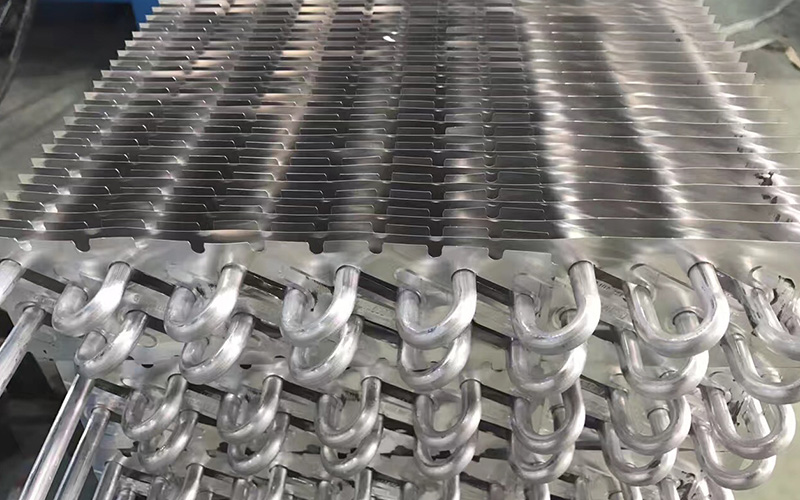
A fin tube evaporator typically includes three main parts: the tubes, fins, and refrigerant. The tubes are usually made from copper or aluminum because these metals conduct heat efficiently. Aluminum fins are mechanically bonded or brazed onto the tubes to maintain thermal contact.
Tight mechanical bonding ensures heat flows smoothly from the fins into the tubes. For the user, this means faster system response and lower power consumption per unit of cooling output. In corrosive or moist environments, coatings or corrosion-resistant alloys protect metal surfaces, extending service life and maintaining performance stability.
Applications of Fin Evaporators
Fin evaporators have the ability to transfer heat efficiently through compact fin tube designs makes them essential in temperature control for air conditioning, refrigeration, processing, and manufacturing environments.
Commercial and Industrial HVAC Systems
In commercial and industrial HVAC systems, fin evaporators regulate indoor temperature and humidity by absorbing heat from the airflow. The use of aluminum or copper fins increases surface area, which enhances heat transfer between the air and refrigerant flowing through the tube network. Because these metals conduct heat well, they help achieve stable cooling with lower energy demand.
Smaller fin spacing offers better heat exchange but also raises maintenance needs due to faster dust buildup. Many systems adopt a moderate spacing of 8–14 fins per inch to balance airflow resistance and efficiency. These design choices matter because restricted airflow reduces performance and can strain the compressor.
Fin tube evaporators also enable dehumidification, as the cold coil surface causes moisture in warm air to condense and drain away. For building operators, this means better indoor air quality and reduced mold risk while keeping power use manageable. Routine cleaning helps maintain heat transfer efficiency and prevents corrosion, especially in humid climates.
Cold Storage and Freezers
In cold storage facilities and industrial freezers, fin evaporators maintain low and even temperatures by extracting heat from enclosed spaces. The evaporator’s expanded fin array maximizes surface area, allowing rapid heat removal even at subzero conditions. This helps prevent product spoilage in frozen food storage and other sensitive goods.
A high-density fin pack can cool faster but also tends to frost more quickly. Frost buildup blocks airflow and reduces efficiency, so systems often include automatic defrost cycles controlled by timers or sensors. This ensures consistent airflow without manual intervention.
Materials such as epoxy-coated aluminum fins and stainless steel housings resist corrosion caused by moisture and salt exposure. In practice, this extends service life and lowers maintenance frequency—a key factor in 24-hour refrigeration operations. Proper airflow management inside the coil prevents uneven temperature zones that could affect stored products.
Food Processing and Pharmaceuticals
In food processing and pharmaceutical manufacturing, fin evaporators keep production environments within tight temperature limits to protect product quality. By drawing heat from the air or process fluid, they help maintain safe processing conditions for items like dairy, meat, or vaccines.
Most systems use fin tubes made from aluminum or copper, chosen for cleanliness and ease of heat transfer. Fin surfaces are often smooth or coated to reduce dust and bacterial buildup, which simplifies cleaning and supports sanitary operation. In regulated industries, this design helps meet hygiene and safety standards set by authorities.
Fin spacing and air circulation speed are optimized to achieve uniform cooling across all production areas. When used with temperature sensors and automated controls, these evaporators deliver responsive thermal regulation. For operators, this means less product loss, shorter cooling times, and improved process stability.
Chemical Manufacturing
Fin evaporators play a key role in chemical manufacturing by removing excess heat from reaction vessels and process lines. Many chemical reactions generate large amounts of heat that must be dissipated to maintain product stability and safety. The finned-tube construction allows compact heat exchangers to achieve rapid cooling without large equipment footprints.
Manufacturers often use copper-nickel alloys or stainless steel to handle corrosive substances and harsh gases. These materials provide strong resistance to oxidation, which translates to longer operational life and fewer shutdowns. Surface treatments such as anti-corrosive coatings further strengthen this protection.
By maintaining precise temperature control, fin evaporators help ensure consistent product composition and improve energy efficiency. In practical terms, this reduces thermal stress on the system and supports safer, more predictable chemical processing.
Core Benefits of Fin Evaporators
The design of fin evaporators supports efficient operation across residential, commercial, and industrial systems while minimizing energy use and space. It improves cooling performance by increasing heat exchange surface area, reducing refrigerant demand, and optimizing airflow.
Core benefits of fin evaporators include:
- Enhanced Heat Transfer Efficiency
- Lower Power Consumption
- High Performance in Demanding Environments
- Compact Design
- Cost-Effectiveness
Enhanced Heat Transfer Efficiency
Fin evaporators improve heat transfer efficiency by attaching thin metal fins, often made of aluminum or copper, to refrigerant tubes. These fins expand the total surface area available for thermal exchange between the air and the refrigerant. Because heat moves more easily across a larger surface, systems reach target temperatures faster.
The use of conductive metals shortens the thermal path, meaning less energy is needed to transfer heat. In practice, this enhances the cooling rate while maintaining consistent temperature control.
Fins with louvered or corrugated designs increase turbulence in airflow, preventing stagnant air pockets that can reduce performance. For the user, this means steady cooling even under high thermal loads, supporting both comfort and process reliability in HVAC and industrial settings.
Lower Power Consumption
A well-designed fin evaporator reduces power consumption by allowing the system to remove heat more efficiently. Because fins enhance contact between the refrigerant and surrounding air, the compressor works less to achieve the same cooling capacity.
Lower compressor activity means reduced electrical load and longer equipment life. This efficiency translates to improved Coefficient of Performance (COP), often seen as a primary indicator of system effectiveness.
In commercial HVAC systems, small improvements in heat transfer can cut operating costs significantly over time. For everyday users, less power use means smaller energy bills and a smaller carbon footprint without sacrificing cooling performance.
High Performance in Demanding Environments
In demanding environments such as food processing or chemical manufacturing, fin evaporators maintain stable heat transfer performance under continuous use. Units exposed to humidity, salt, or chemicals often use epoxy-coated or corrosion-resistant fins made from treated aluminum or stainless steel.
This protection minimizes deterioration that could reduce heat exchange efficiency. Because the coating limits oxidation, it ensures the fins remain thermally conductive.
In practice, this reliability supports temperature-sensitive operations, from refrigeration warehouses to production lines. The steady performance prevents temperature fluctuations that can affect product quality or process safety, making these evaporators suitable for critical thermal tasks.
Compact Design
Fin evaporators achieve strong cooling capacity in a compact design, making them practical where installation space is limited. By increasing the effective surface area through fins, the unit can handle the same cooling load as a larger, unfinned system.
This arrangement shortens airflow paths and improves heat exchange in smaller housings. The compactness also simplifies integration into modular HVAC systems or transport refrigeration units.
For users, the space savings mean more flexibility in system layout and easier maintenance access. Despite the smaller size, the airflow pattern remains balanced, ensuring consistent cooling across the unit.
Cost-Effectiveness
Fin evaporators provide cost-effectiveness through improved energy efficiency and reduced material use. The enhanced heat transfer allows manufacturers to design lighter coils that use less copper and aluminum without sacrificing performance.
Lower energy use reduces lifetime operating costs, while simple fin-and-tube construction keeps maintenance accessible and affordable. Systems achieve a higher COP for each unit of electricity consumed, giving better long-term returns.
For equipment operators, this translates into lower total cost of ownership. Businesses gain dependable cooling with manageable upkeep expenses, making fin evaporators a sound investment in both performance and cost control.
How to Choose a Right Fin Evaporator?
Selecting the right fin evaporator depends on matching its design, capacity, and material to the intended application. Each factor affects how efficiently the system transfers heat and how much power it consumes during operation.
1. Match cooling load and fin spacing.
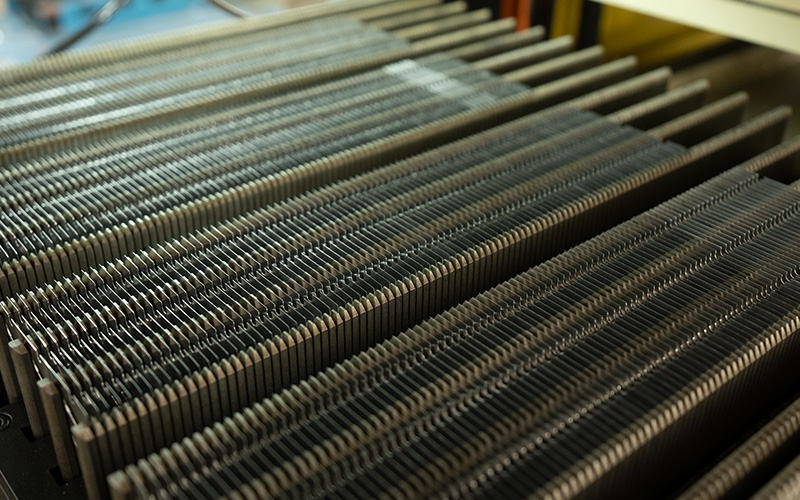
Fin spacing influences airflow and frost buildup. A tighter spacing (around 4 mm) boosts heat transfer performance because more surface area contacts the air, but it also increases resistance and may require frequent defrosting. Wider spacing (over 8 mm) reduces airflow blockage and suits low-temperature or high-humidity environments. For the user, this balance determines consistent cooling and lower maintenance.
2. Evaluate material selection.
Fins made of aluminum are light and conduct heat efficiently, while copper options provide slightly better thermal conductivity at higher cost. In harsh or food-grade settings, epoxy-coated or stainless-steel casings resist corrosion. This choice directly affects lifespan and cleaning frequency.
3. Consider energy efficiency.
An evaporator that achieves the target temperature with less power consumption indicates better energy transfer per watt. Efficient models typically use optimized tube geometry and smooth airflow paths to minimize pressure drops. In practice, this translates to stable operation and reduced electricity costs.
4. Review system compatibility.
The evaporator must match the refrigerant type, pressure range, and airflow volume of the entire cooling system. Choosing compatible components ensures safe operation and predictable thermal performance across varying load conditions.
Frequently Asked Questions
Fin evaporators improve heat transfer by expanding the surface area for air-to-refrigerant contact, reducing energy use while maintaining compact designs. Ongoing design innovations emphasize material efficiency, automation, and corrosion resistance, helping industries meet both performance and sustainability goals.
What advantages do fin evaporators offer in cooling systems?
Fin evaporators increase the rate of heat exchange by attaching metal fins, usually aluminum or copper, to refrigerant tubes. Because these metals have high thermal conductivity, they draw heat from the air more effectively, allowing faster cooling at lower energy input.
In practice, this means HVAC and refrigeration systems can maintain desired temperatures without oversizing the equipment. The fins also create consistent airflow over the coils, which supports better humidity control and temperature stability inside conditioned spaces.
How do fin evaporators compare to other types of evaporators in terms of energy consumption?
Fin evaporators generally use less energy than plain-tube designs because their extended surface area transfers more heat per unit of refrigerant circulated. This design reduces compressor workload and shortens cooling cycles.
For users, this translates to lower operating costs and reduced strain on electrical systems. When properly maintained, fin spacing and geometry balance airflow resistance with efficient heat movement, keeping energy performance consistent across applications.
What innovations in fin evaporator design have emerged recently?
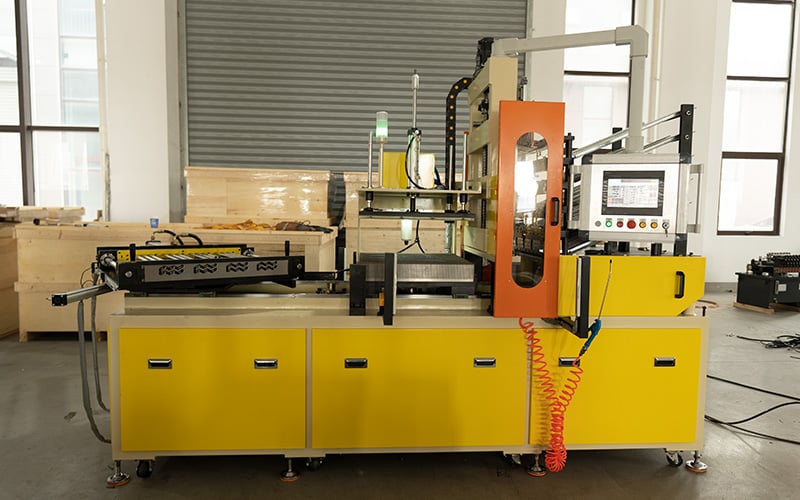
Recent designs incorporate microchannel tubes and optimized fin geometry to improve heat distribution and airflow efficiency. Some manufacturers use precision-controlled bending systems and automated fin assembly to enhance uniformity and reduce material waste.
Corrosion-resistant coatings, such as epoxy or hydrophilic layers, are now applied to extend service life in humid or chemical environments. In real terms, these updates help equipment last longer, perform predictably, and reduce maintenance downtime in both industrial and commercial settings.
Want to Know More About Our Products?
View All Products Now